
Reading Police Blotter Access Guide
The Reading police blotter covers incidents handled by the Reading Police Department in Berks County. Reading is one of the larger cities in eastern Pennsylvania, with roughly 95,000 residents and a department that includes 168 sworn officers and 34 civilian staff. The department serves a dense urban environment and handles a high volume of calls for service each year. This page explains how to find and request Reading police blotter records using the city's Right-to-Know process and other public resources.
Reading Quick Facts
Reading Police Department Overview
The Reading Police Department operates from its headquarters at 815 Washington Street, Reading, PA 19601. The department is staffed with 168 sworn officers and 34 civilian employees, making it one of the larger municipal police forces in Pennsylvania outside of Philadelphia and Pittsburgh. Officers respond to calls across Reading's neighborhoods, and all incidents that generate formal reports become part of the Reading police blotter system.
The department handles the full range of law enforcement services. Patrol, investigations, traffic enforcement, community programs, and specialty units all operate under the same command structure. Crime data, organizational information, and department contacts are available through the city website at readingpa.gov. Residents with questions about specific incidents can reach the department's non-emergency line at 610-655-6116. For direct emergencies, call 911 or the direct emergency line at 610-655-6111.
The Reading Police FAQ page at readingpa.gov/police-faq-main answers common questions about department services, report procedures, and how to contact the right unit for your situation. It is a useful starting point before visiting in person or submitting a formal records request. Contact information for all department divisions is also available at readingpa.gov/contact-the-reading-police-by-phone.
Note: Reading's police force serves a compact, densely populated area. The department handles a high volume of incidents, so being specific when requesting Reading police blotter records helps staff locate the correct report faster.
Reading Police Blotter and Court Records
The Pennsylvania Unified Judicial System provides an online portal for searching court records tied to Reading police blotter incidents that resulted in charges.
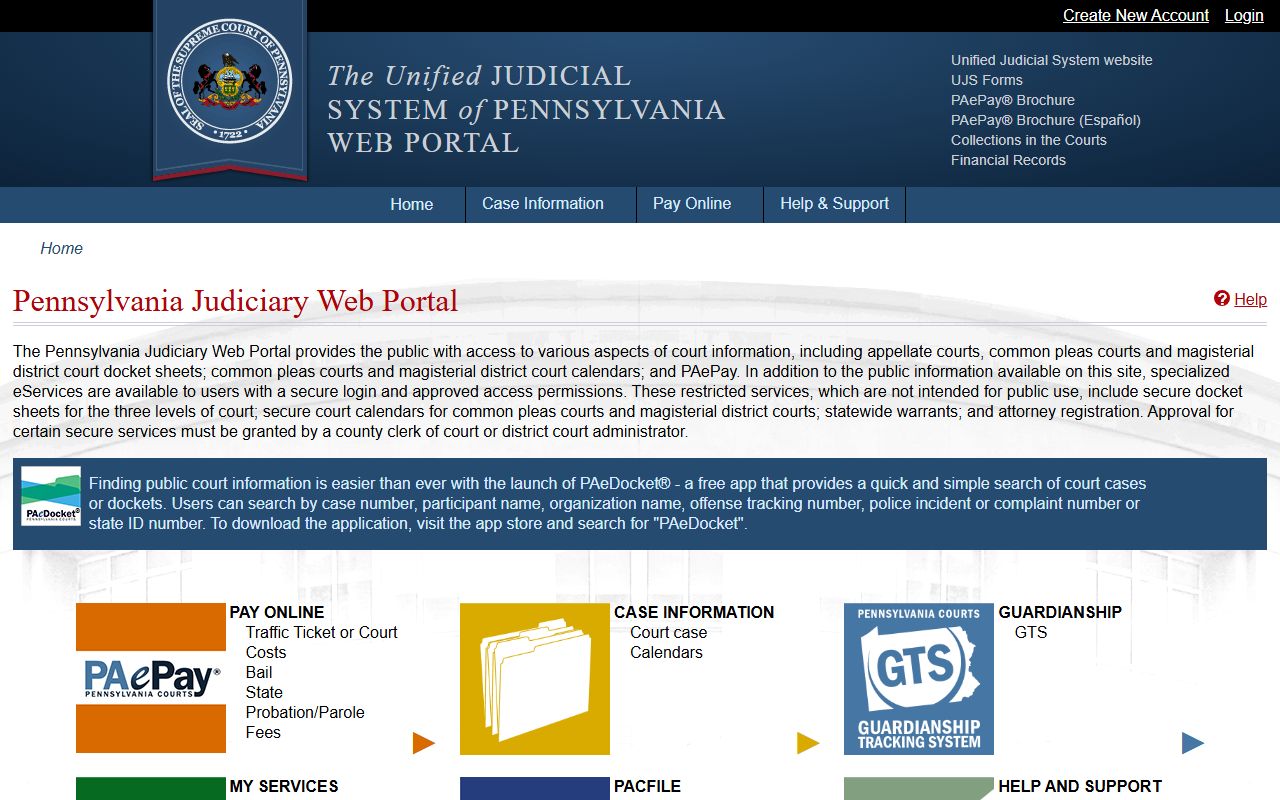
Reading residents can search Berks County Court of Common Pleas cases at no cost through the UJS Portal, tracking any incident from the police blotter through to final court disposition.
Many Reading police blotter entries lead to court filings once an arrest is made. The UJS Portal at ujsportal.pacourts.us covers all Berks County court records, including Magisterial District Judge cases from Reading and Common Pleas cases involving more serious charges. Search by name or case number to find docket entries, hearing dates, and case outcomes. This is a free resource that lets you follow a Reading incident from the initial police blotter entry through the entire court process. The Pennsylvania Courts website at pacourts.us also has plain-language guides for understanding what you find in court records.
Docket sheets in Reading cases show the charges filed, bail conditions, court dates, and any convictions or dismissals. These are public records for most adult criminal cases. Juvenile matters are sealed, and some proceedings may be restricted by court order. When you combine a Reading police blotter record with the corresponding court docket, you get a complete view of how a specific incident was handled from first response through final outcome.
Reading Right-to-Know Requests
The Reading Police Department's RTK page provides public records request forms in both English and Spanish, making the process accessible to all Reading residents.
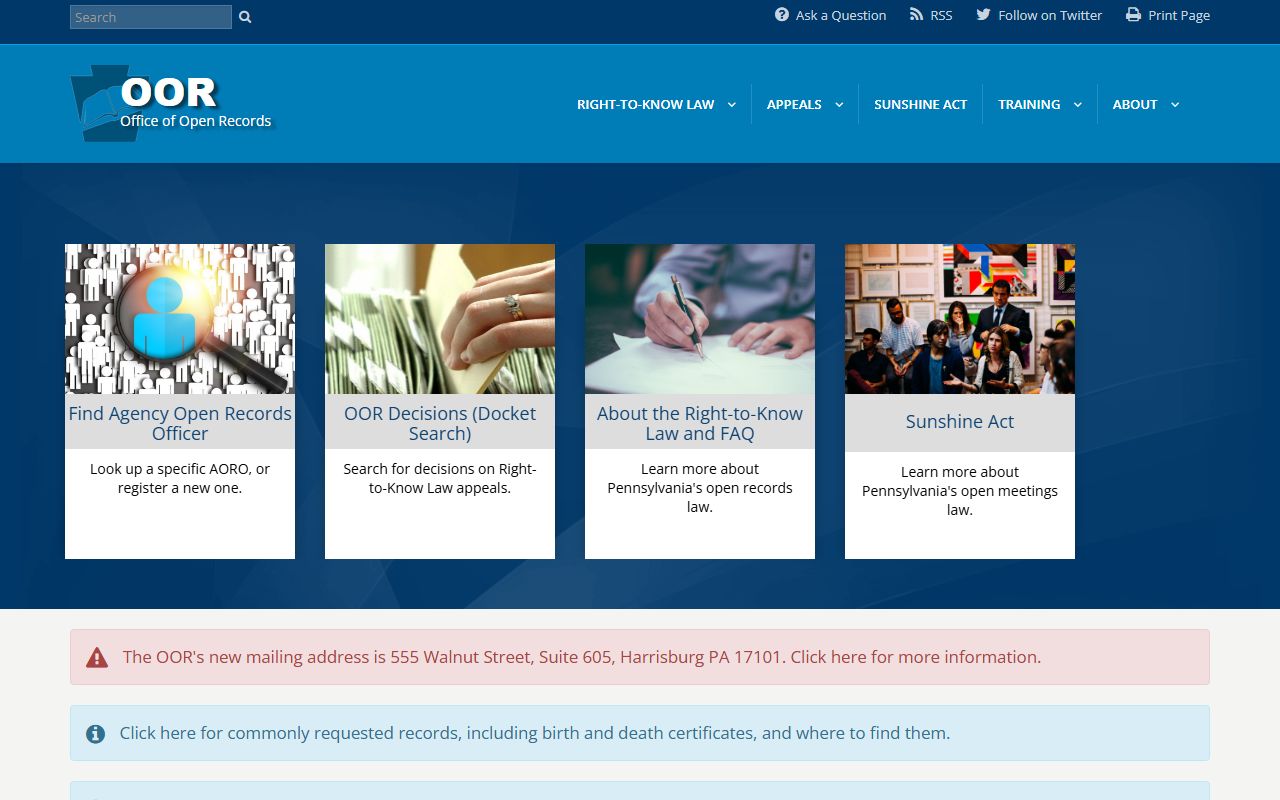
Residents can submit RTK requests for Reading police blotter records through the city's Law Department or through the state's central portal at openrecords.pa.gov.
Pennsylvania's Right-to-Know Law at 65 P.S. §§ 67.101-67.3104 gives residents the right to request public records from the Reading Police Department, including police blotter entries and incident reports. The Reading RTK page at readingpa.gov/right-to-know has request forms available in English and Spanish. This bilingual resource reflects Reading's diverse community and makes the RTK process more accessible to all city residents.
The Open Records Officer for the City of Reading is in the Law Department at Room 2-54, City Hall, 815 Washington Street, Reading PA 19601. The phone number is 610-655-6208 and the email is solicitor@readingpa.gov. Requests must be submitted in writing and describe the records sought with enough detail for staff to find them. The city must respond within five business days, with extensions allowed by law for complex or voluminous requests. If your request for Reading police blotter records is denied or partially denied, you can appeal to the Pennsylvania Office of Open Records at openrecords.pa.gov.
When submitting a Reading police blotter RTK request, include the incident date, location, type of incident, and any case or report numbers if you have them. Spanish-speaking residents can use the Spanish-language form available on the RTK page. The city is required to respond in a timely way regardless of which language the request form is submitted in, as long as the required information is provided.
| Address | 815 Washington Street Reading, PA 19601 |
|---|---|
| Open Records Office | Law Department, Room 2-54, City Hall |
| Phone | 610-655-6208 |
| solicitor@readingpa.gov | |
| RTK Forms | Available in English and Spanish at readingpa.gov/right-to-know |
Pennsylvania State Police Records for Reading
The Pennsylvania State Police ePATCH system provides statewide criminal history checks that can supplement Reading police blotter searches.
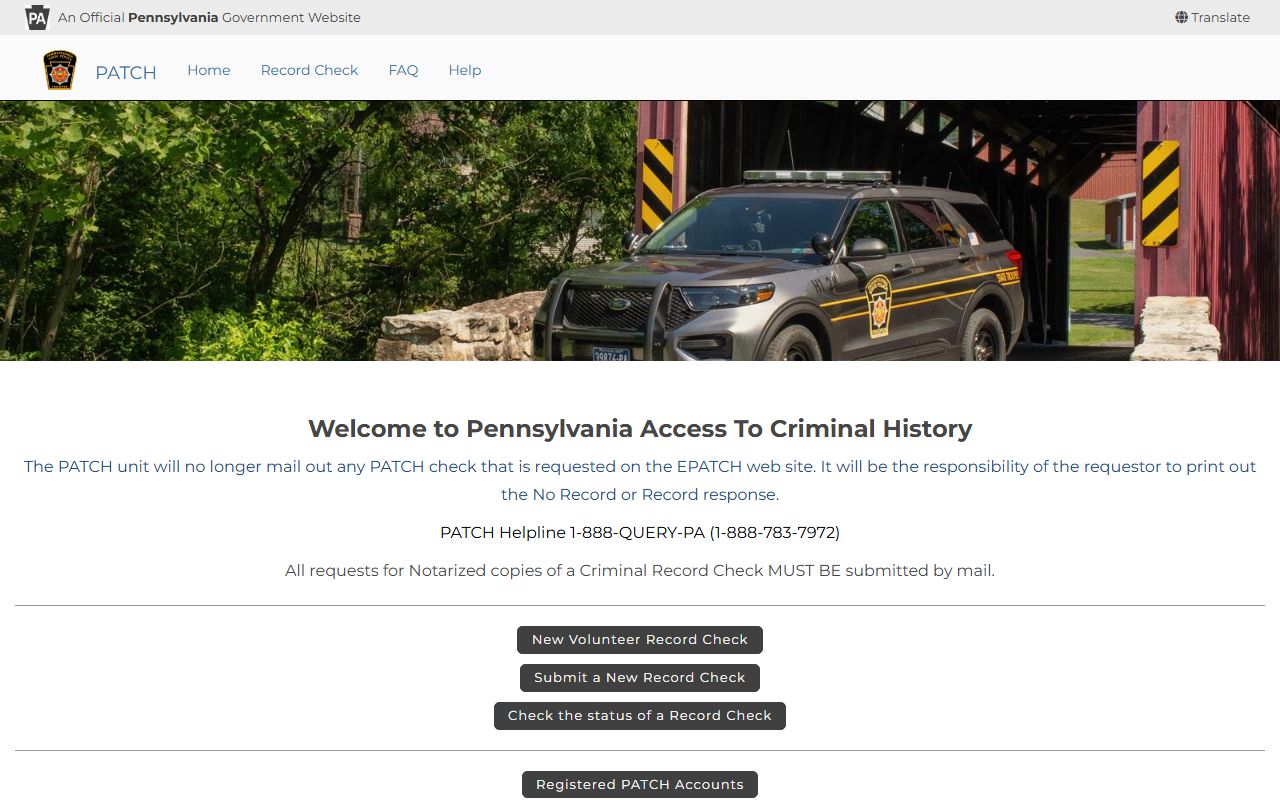
The ePATCH system at epatch.pa.gov provides statewide criminal history information for $22, covering arrest and conviction records across all Pennsylvania counties including Berks County.
The ePATCH portal covers statewide criminal history records and is available to any Pennsylvania resident for $22 per search. This pulls from statewide arrest and conviction data, including records from Reading and Berks County. It does not replace a local Reading police blotter search but adds context when you need to know about a person's broader criminal history across the state. Results are returned quickly and cover decades of records where available.
The PA State Police also publishes Public Information Release Reports at pa.gov for incidents handled by state troopers. State Police have jurisdiction on state highways and in areas without municipal coverage. For incidents on Interstate 176, US 422, or other state routes near Reading, a PIRR may contain records not found in the city's own police blotter. State RTK requests go through a separate process at pa.gov/services/psp.
Note: Under 18 Pa.C.S. Chapter 91, criminal history records obtained through ePATCH have specific permissible uses. Review those restrictions before using results for any formal purpose.
Reading Accident Reports
Traffic accident reports in Reading are not available through in-person visits to the police department. Instead, the city directs residents to CrashDocs.org for online access to crash reports. This third-party system provides electronic copies of traffic accident reports filed by Reading officers. You will need the report number, the date of the crash, or the name of a person involved to locate the correct record.
CrashDocs.org charges a fee for report access. The fee varies by report type and is set by the provider, not the city. If you cannot find a crash report through that portal, contact the Reading Police Department at 610-655-6116 for assistance. Officers can verify whether a report was filed and provide guidance on how to obtain it. Not all crashes result in a formal police report, particularly minor incidents where no injury or significant property damage occurred.
For all other types of Reading police blotter records beyond crash reports, the RTK process through the Law Department is the appropriate channel. Incident reports, arrest records, and other non-crash police records are handled through the standard records request process described on the city's Right-to-Know page.
Berks County Resources
Reading is the county seat of Berks County. County-level court records, public safety information, and additional public resources are available through Berks County.